
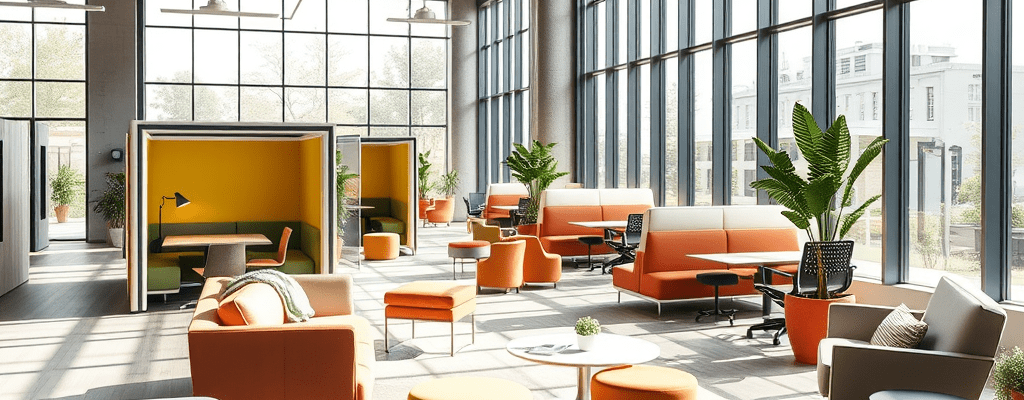
As the landscape of work continues to evolve, one trend is becoming increasingly clear: flexibility isn’t just a perk—it’s a necessity. With hybrid work models, shifting employee expectations, and a renewed focus on wellbeing, traditional office layouts are giving way to environments designed for adaptability. At the heart of this transformation lies breakout office furniture—modular, informal, and people-centered.
Breakout furniture is no longer considered an “extra” or “nice-to-have.” It has become a vital component of modern office design, supporting a wide range of needs from collaboration to relaxation. But why has it gained such importance—and why is it here to stay?
The Rise of Flexible Work Environments
The way people work has shifted dramatically in recent years. The rise of remote and hybrid work models means employees now spend less time at fixed desks and more time in varied settings. Offices must adapt by offering environments that support focused tasks, team discussions, and everything in between.
Breakout furniture offers the agility needed for this new era. Modular seating, mobile partitions, and informal meeting pods allow organizations to reconfigure spaces without major renovations. This kind of flexibility is invaluable in today’s ever-changing world of work.
What Makes Breakout Furniture the Right Choice for Modern Offices
Beyond its flexibility, breakout furniture offers a number of tangible benefits that contribute to a healthier and more productive workplace:
- Encourages spontaneous collaboration
- Reduces the formality of meetings
- Supports mental health through comfortable, calming environments
- Fosters creativity by providing a change of scenery
- Accommodates diverse working styles and preferences
These benefits align directly with modern organizational goals—boosting engagement, innovation, and retention.
Designing for the Employee Experience
One of the key shifts in workplace strategy is a focus on employee experience. Companies are investing in spaces that prioritize comfort, autonomy, and inclusivity. Breakout areas are central to this vision, offering employees a place to work how they want, where they want.
Well-designed breakout spaces can:
- Act as informal hubs for quick team syncs
- Serve as quiet retreats for focus or decompression
- Provide touchpoints for hybrid teams to connect when on-site
- Support neurodiverse employees who need a variety of sensory experiences
By moving away from a one-size-fits-all approach, breakout furniture helps businesses create environments that support the whole person—not just the worker.
Sustainability and Scalability
Another reason for the growing popularity of breakout office furniture is its scalability. Whether an organization occupies a single floor or an entire campus, these pieces can adapt and grow with the business. Many manufacturers also offer sustainable materials and modular systems that reduce environmental impact—an increasingly important factor for eco-conscious brands.
This versatility means companies can test new layouts and scale successful setups across locations without needing to start from scratch.
Future-Proofing the Office
What will the office look like in five years? While it’s impossible to know for sure, all signs point to spaces that are:
- More fluid and multi-functional
- Designed with wellness and inclusion in mind
- Enhanced by technology, but grounded in human needs
Breakout furniture checks all of these boxes. It bridges the gap between structure and spontaneity, between personal focus and team connection. In doing so, it makes the office a destination—not an obligation.
The article https://www.architecturelist.com/modern-breakout-office-furniture-transforming-workspaces-for-enhanced-collaboration-and-productivity/ dives deeper into how these design shifts are already taking place across industries and regions.
Key Considerations for Implementation
If you’re planning to introduce or expand breakout furniture in your office, keep the following in mind:
- Assess your team’s work habits and preferences
- Choose modular, reconfigurable furniture to maximize flexibility
- Blend aesthetics with ergonomics—looks matter, but comfort does more
- Prioritize acoustic design in open breakout areas
- Involve employees in the design process for better adoption
Conclusion
Breakout office furniture isn’t a fleeting design trend—it’s a strategic response to the changing nature of work. As businesses seek to retain top talent, support wellness, and encourage innovation, the need for adaptable, human-focused workspaces will only grow.
By investing in thoughtful breakout solutions, companies not only create beautiful offices—they also foster resilient, forward-thinking teams. And in the evolving world of work, that’s the smartest move any organization can make.
 Furnito